
Duplicate, Google Chose Different Canonical Than User: Full Fix Guide for Websites
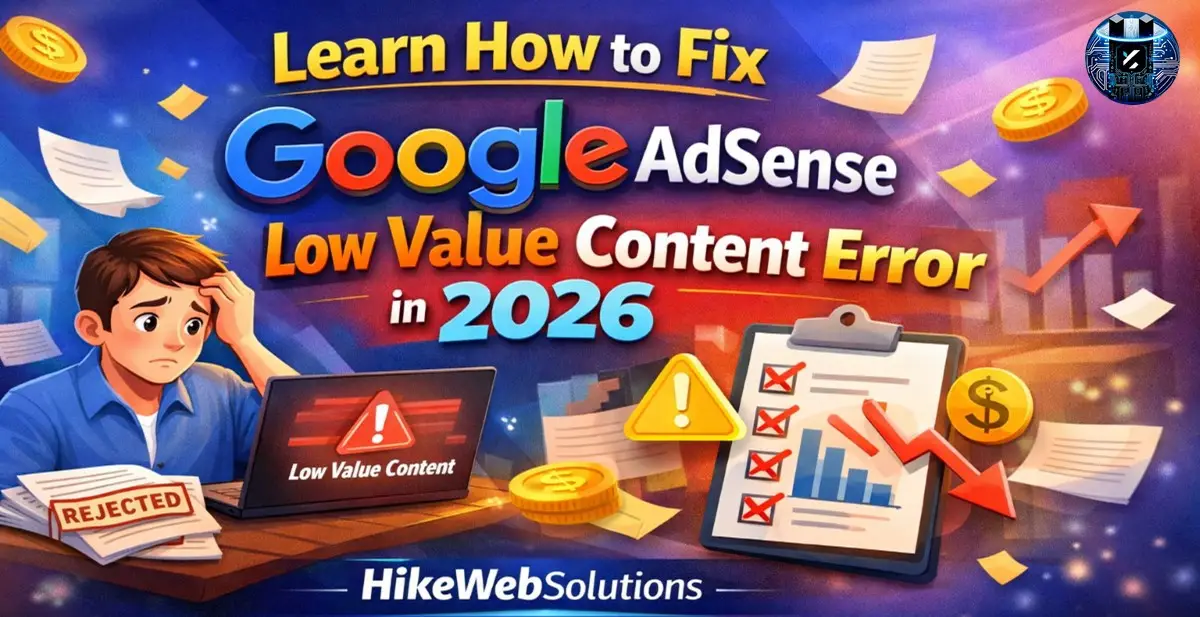
Learn How to Fix Google AdSense Low Value Content Error in 2026
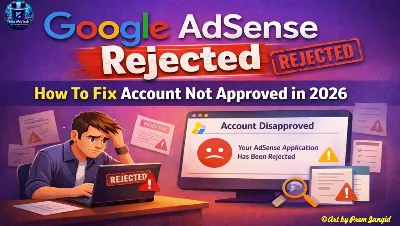
Web Development InsightsGetting approved by Google AdSense in 2026 requires more than just publishing articles. Many website owners face repeated rejection due to the “Low Value Content” error. Even websites with decent traffic can get rejected if they fail to meet quality, originality, structure, and trust standards.
If your WordPress website has been rejected, the problem is usually fixable. This detailed guide explains why the Low Value Content error happens and how to solve it while improving user engagement and long-term trust.
What Is Google AdSense Low Value Content Error?
The Low Value Content error appears when your website does not meet the quality standards defined by Google AdSense. When your application is reviewed, Google evaluates whether your content genuinely helps users or simply exists to display ads.
According to Google publisher guidelines, websites must provide original, meaningful, and substantial content. If your site contains thin pages, duplicate material, or lacks structure, it may be flagged as low value.
Why This Error Happens
-
Thin or short articles
-
Duplicate or scraped content
-
Overuse of AI without editing
-
Poor navigation
-
Weak trust signals
-
No clear niche focus
Traffic alone does not guarantee approval. Quality and trust matter more.
Thin Content and Minimum Quality Standards
Thin content is one of the most common rejection reasons in 2026. If your articles are under 600 words and only provide surface-level explanations, they may not satisfy user intent.
An ideal blog post should:
-
Be 1200–1500+ words
-
Cover the topic comprehensively
-
Include structured headings
-
Provide examples and case insights
-
Add FAQs
-
End with a clear summary
For example, if you have already written a post about improving blog traffic, you can internally link it like this:
-
Internal Link Example: “You can also read our detailed guide on How to Increase Organic Traffic in 2026 for advanced SEO strategies.”
If you have a separate article on site speed, you can add:
-
Internal Link Example: “Improving speed is critical. Follow our tutorial on How to Speed Up a WordPress Website to enhance performance.”
Internal linking improves engagement and keeps users on your website longer.
Writing Unique and Intent-Focused Content
Generic topics often fail because thousands of similar articles already exist online. Instead of broad subjects, focus on specific user intent.
Instead of writing:
“How to Make Money Online”
Write:
“How Engineering Students Can Start a Technical Blog in 2026”
Specific topics improve authority and engagement.
External References for Authority
You can also link to authoritative resources:
-
External Link Example: Refer to the official AdSense content policies on the Google AdSense Help Center for updated publishing requirements.
-
External Link Example: Check Google’s Search Essentials documentation to understand content quality expectations.
Linking to trusted sources increases credibility and shows that your content is research-backed.
AI-Generated Content: Safe Usage in 2026
AI content is widely used, but unedited AI articles often feel robotic and repetitive. Google does not automatically penalize AI content, but low-quality automated writing can reduce trust.
Best practices:
-
Use AI for drafting
-
Edit manually
-
Add real examples
-
Fact-check information
-
Maintain a natural tone
If your site already has a post about content writing strategy, you can connect it internally:
-
Internal Link Example: “For detailed writing frameworks, read our guide on High-Quality Blog Writing Techniques.”
Strong internal connections create topical authority.
Strengthening EEAT for Approval
EEAT (Experience, Expertise, Authoritativeness, Trustworthiness) plays a major role in approval decisions.
To improve EEAT:
-
Add an About page
-
Include author bios
-
Create a Contact page
-
Publish consistently in one niche
-
Provide accurate, well-researched content
When you link to authoritative external websites like Google documentation, it reinforces trust. External references show that your information aligns with recognized standards.
Fixing Technical Issues That Lower Value
Technical problems can silently harm your approval chances.
Common issues include:
-
Empty category pages
-
Broken links
-
Poor mobile design
Technical Checklist
| Element | Required |
|---|---|
| HTTPS Enabled | Yes |
| Mobile Responsive | Yes |
| Fast Loading | Yes |
| No Broken Links | Yes |
| Structured Navigation | Yes |
Ensure every category has at least 3–5 posts. Remove unused tags and fix all 404 errors.
If you have written a technical guide previously, link it:
-
Internal Link Example: “Follow our complete checklist in WordPress Technical SEO Guide 2026 to audit your site.”
Building Engagement Before Applying
User engagement signals are critical in 2026. Google indirectly measures:
-
Time on page
-
Bounce rate
-
Navigation behavior
-
Content depth
To improve engagement:
-
Write structured long-form content
-
Use subheadings
-
Add FAQs
-
Improve readability
-
Include internal links
-
Provide real-world examples
Apply only when:
-
You have 25–30 quality posts
-
Organic traffic has started
-
Technical errors are fixed
-
Legal pages are complete
Frequently Asked Questions
1. How many posts are ideal before applying?
Answer: At least 25–30 high-quality articles are recommended.
2. Is traffic required?
Answer: While not officially mandatory, consistent organic traffic increases trust.
3. Can AI-written content get approved?
Answer: Yes, if edited thoroughly and supported with real insights.
4. How long should I wait before reapplying?
Answer: Wait 2–3 weeks after fixing all issues.
Do’s and Don’ts
Do’s
-
Focus on original and in-depth content
-
Add internal and external references
-
Improve site structure
-
Build niche authority
Don’ts
-
Copy content
-
Publish bulk unedited AI articles
-
Leave empty pages
-
Use fake traffic sources
Finally
The Google AdSense Low Value Content error in 2026 is primarily about trust, authority, and user value. Google wants websites that prioritize readers over revenue.
If you build strong internal linking, reference credible external sources, maintain technical health, and publish authentic, detailed content, approval becomes significantly easier.





Leave Message